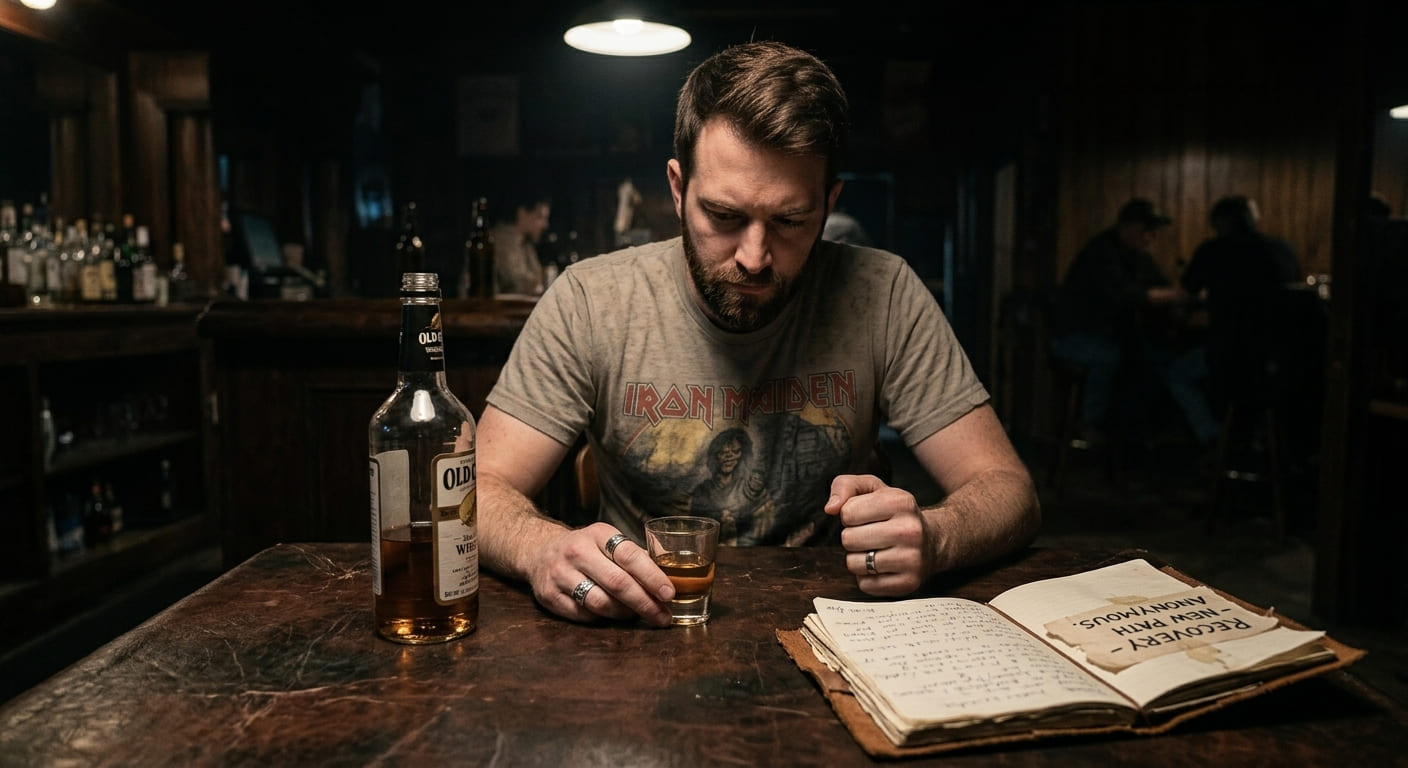
Maybe Drinking Was Never Supposed to Become a Problem
For some people, drinking begins as something social.
A weekend drink.
A celebration.
A drink with friends.
Something to relax after work.
Something that feels completely ordinary.
Then, slowly, things can change.
The drink after work becomes something you look forward to every day.
One becomes several.
You start drinking earlier than you used to.
You begin making excuses for drinking.
You tell yourself:
“I can stop whenever I want.”
Maybe you can stop for a day.
But then something happens.
You have a difficult day.
You feel stressed.
You cannot sleep.
You have an argument.
You feel lonely.
And suddenly drinking feels like the easiest answer again.
If you recognize yourself in this, Wegotyoualways is not here to judge you.
We are here because sometimes people need somewhere to begin being honest.
Alcohol Is More Than a Bad Habit
Alcohol is a psychoactive substance that can cause dependence.
The World Health Organization says alcohol consumption contributes to millions of deaths globally each year and is associated with more than 200 diseases, injuries and health conditions.
The risks vary depending on how much and how often someone drinks.
That does not mean everyone who drinks has an alcohol-use disorder.
It means alcohol can become a serious health issue, and recognizing a problem early matters.
When Should You Start Paying Attention?
One of the most useful questions is not:
“Am I drinking more than someone else?”
Ask:
“What is alcohol doing to my life?”
You may want to look more closely if you:
- Regularly drink more than you planned.
- Try to cut down but struggle to maintain it.
- Spend significant time thinking about drinking.
- Continue drinking despite problems at home, work or school.
- Have arguments with people you care about because of alcohol.
- Miss responsibilities because of drinking or recovering from drinking.
- Use alcohol mainly to cope with stress, sadness, anxiety or loneliness.
- Need increasingly strong reasons to justify drinking.
- Have people close to you expressing concern.
- Experience symptoms when you do not drink.
These signs do not provide a diagnosis by themselves.
They are reasons to take your situation seriously.
Sometimes Alcohol Becomes an Emotional Tool
This deserves more attention.
People do not always drink because they want alcohol.
Sometimes they want what they believe alcohol gives them.
Relief.
Confidence.
Sleep.
Escape.
Silence.
A break from worrying.
Alcohol can temporarily change how you feel.
But the original problem is still waiting when the effect wears off.
This can create a cycle:
Difficult feeling → drinking → temporary relief → consequences → more difficult feelings → drinking again
Breaking that cycle requires more than removing alcohol.
It requires finding other ways to deal with the things that made alcohol attractive in the first place.
Alcohol Can Affect More Than the Person Drinking
The consequences can reach:
- Relationships
- Families
- Work
- School
- Finances
- Physical health
- Emotional wellbeing
- Community life
Perhaps your drinking has created arguments at home.
Perhaps someone no longer trusts you.
Perhaps you have missed important moments.
Perhaps money that should have gone somewhere else has been spent on alcohol.
Perhaps work or studies have suffered.
These consequences can be painful to acknowledge.
But acknowledging them is not the same as condemning yourself.
It is information.
And information can help you change.
Do Not Compare Your Drinking to Someone Else's
One of the easiest ways to minimize a problem is to say:
“At least I'm not as bad as that person.”
That comparison does not help.
Your health is not a competition.
You do not need to reach some dramatic point before you are allowed to ask for help.
If alcohol is causing problems in your life, that is enough reason to look at it.
Important: Stopping Suddenly May Not Always Be Safe
This is one area where professional help matters.
For people who have developed alcohol dependence, suddenly stopping alcohol can cause withdrawal, which can sometimes become medically serious.
If you drink heavily or regularly and think you may be physically dependent, speak with a healthcare professional before attempting to stop abruptly.
Getting medical support is not a failure.
It is a safety decision.
A professional can help determine what level of support is appropriate and whether medically supervised withdrawal is necessary.
Recovery Does Not Have to Begin with a Perfect Plan
You may be delaying help because you think you need to have everything figured out first.
You don't.
Your first step might simply be:
“Alcohol is becoming a problem for me.”
Your next step could be:
- Telling someone you trust.
- Speaking with a healthcare professional.
- Learning about your drinking patterns.
- Identifying situations that lead to drinking.
- Joining a recovery community.
- Building healthier daily routines.
You do not need a perfect plan.
You need a beginning.
Learn Your Triggers
Pay attention to what happens before you drink.
Is it:
- Friday evening?
- Payday?
- Being alone?
- A particular group of friends?
- Stress at work?
- Conflict at home?
- Boredom?
- A difficult memory?
- Feeling rejected?
- A celebration?
Knowing your triggers gives you a chance to prepare.
Then ask:
“What else can I do when this situation happens?”
That question can become extremely important in recovery.
Build a Life That Does Not Revolve Around Drinking
Recovery is not only about removing alcohol.
It is also about putting things back into your life.
Sleep.
Relationships.
Movement.
Meaningful work.
Learning.
Hobbies.
Community.
Healthy routines.
Small daily activities may seem insignificant.
But recovery is often built through ordinary decisions repeated consistently.
A Setback Does Not Erase Your Progress
Many people expect recovery to be a straight line.
Real life is rarely that simple.
If you have a setback, try not to turn it into:
“I am a failure.”
Instead ask:
“What happened before it?”
Look at:
- What you were feeling.
- Where you were.
- Who you were with.
- What you needed at that moment.
- What might have helped.
That turns a painful experience into information you can use.
When Professional Support Is Important
Consider seeking professional help if alcohol is affecting your:
- Health
- Relationships
- Responsibilities
- Work
- Studies
- Finances
- Ability to function normally
Support may include a doctor, addiction specialist, counsellor, psychologist or other qualified healthcare provider.
Peer-support communities can also provide connection with people who understand what rebuilding life can feel like.
There is no prize for struggling alone.
Your First Step With Wegotyoualways
You are more than your drinking.
You are more than the argument you had.
You are more than the missed day.
You are more than the promise you broke.
You are still a person capable of change.
At Wegotyoualways, we want recovery to feel practical and human.
You can:
- Learn about your patterns.
- Identify your triggers.
- Work on healthier daily routines.
- Use recovery tools.
- Find supportive communities.
- Get professional support when you need it.
If alcohol has started taking more from your life than it gives, you do not have to wait until everything falls apart.
Start where you are.
Tell the truth about what is happening. Get the support you need. Take the next step.
That first honest step matters.
Wegotyoualways Is Here
You do not have to do this alone.
0 Comments
Login or sign up to leave a comment
No comments yet. Be the first to share your thoughts.