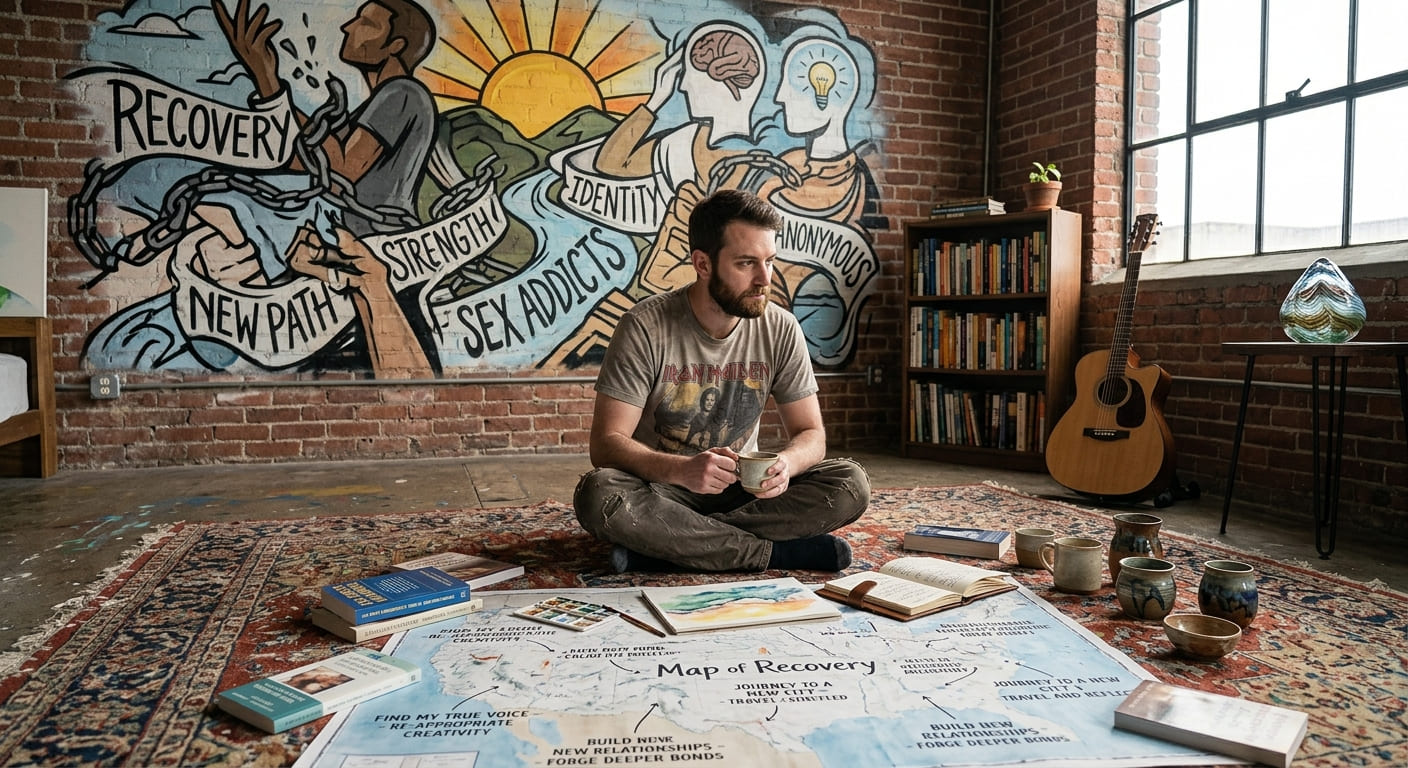
There is a difference between knowing you use pornography and feeling like pornography is starting to control you.
Maybe you have told yourself you would stop, only to find yourself returning to it later. Maybe it happens when you are stressed, lonely, bored, overwhelmed or unable to sleep. Maybe you don't even particularly want to do it anymore, but the habit has become automatic.
And perhaps the hardest part is what happens afterwards.
You feel disappointed in yourself. You promise that this was the last time. You try to avoid certain situations. Then the cycle starts again.
If that sounds familiar, this article is not here to shame you.
Wegotyoualways exists because people need somewhere they can be honest about struggles that are often difficult to talk about.
First, pornography use does not automatically mean you have a disorder
This is important.
Not everyone who views pornography has a compulsive behavior problem, and simply wanting to reduce or stop a behavior does not automatically mean someone has a clinical disorder.
The concern becomes different when sexual behavior becomes difficult to control and begins causing significant distress or interfering with important areas of life.
The World Health Organization includes compulsive sexual behavior disorder in ICD-11 under impulse-control disorders. The focus is not simply on whether someone has sexual thoughts or behaviors, but on a persistent pattern involving difficulty controlling the behaviour and significant problems associated with it.
That distinction matters because shame can make an already difficult situation worse.
You are not helped by being told that you are a bad person.
You are helped by understanding what is happening and identifying what you can change.
Why pornography can become part of a difficult cycle
For some people, pornography becomes connected to particular emotional states:
- Stress.
- Loneliness.
- Boredom.
- Anxiety.
- Frustration.
- Difficult emotions.
- Avoidance.
The behavior can become a quick way of changing how you feel in the moment. Over time, your brain can begin associating certain situations with the behaviour.
You may notice that the urge appears automatically when you are alone with your phone. Or late at night. Or after a difficult day. Or whenever you experience a particular emotion.
Eventually, the question may stop being:
“Do I actually want to do this?”
and become:
“How do I stop myself from doing this automatically?”
That is an important change.
The signs may be easier to notice in your life than in a checklist
You may be struggling with your pornography use if you repeatedly experience things such as:
- Spending more time on it than you intended.
- Trying to reduce your use and repeatedly returning to the same pattern.
- Using it mainly to escape difficult emotions.
- Feeling that the behavior has become automatic.
- Staying up later than you planned because of it.
- Allowing it to interfere with school, work, responsibilities or relationships.
- Becoming increasingly isolated.
- Feeling distressed about the pattern but continuing it anyway.
- Hiding the extent of the behavior from people close to you.
- Finding that previous attempts to change have not lasted.
None of these points should be used to diagnose yourself.
They are simply signals worth paying attention to.
The most useful question may be:
“Is this behavior still something I am choosing, or has it become something I feel unable to control?”
The emotional side is often overlooked
People sometimes focus entirely on the behavior and ignore what is happening underneath it.
But the behavior may be connected to something else.
Perhaps you are lonely.
Perhaps you have difficulty dealing with rejection.
Perhaps you are under enormous pressure.
Perhaps you are using screens constantly because you do not know how to switch your mind off.
Perhaps you have never learned healthy ways to deal with difficult emotions.
That does not mean there is always one hidden cause.
It simply means that changing the behavior may require understanding the circumstances surrounding it.
If pornography has become your main way of escaping stress, removing the behavior without developing another way to handle stress can leave a very uncomfortable gap.
That gap deserves attention.
Shame is not the same thing as accountability
There is a difference between saying:
“I want to take responsibility for this.”
and saying:
“I am a terrible person because I struggle with this.”
The first can help you change.
The second can keep you trapped.
Shame often encourages secrecy. Secrecy makes it harder to ask for help. Isolation makes the behavior easier to repeat.
A healthier approach is honest and specific:
“This is happening in my life. I don't like where it is taking me. I want to understand it and change it.”
That is not weakness.
That is a starting point.
Start by learning your pattern
Before trying to completely change your behavior, spend some time noticing when it happens.
You might privately record:
- What was happening immediately beforehand?
- What were you feeling?
- Where were you?
- Were you alone?
- What device were you using?
- What time of day was it?
- What happened afterwards?
- Did you feel relieved, disappointed, numb, anxious or something else?
You are looking for patterns, not reasons to punish yourself.
You might discover that the behavior is strongly connected to loneliness.
Or boredom.
Or late-night phone use.
Or difficult emotions.
Once you know the pattern, you have something concrete to work with.
Make the difficult moments less automatic
Change becomes easier when there is a little more space between an urge and an action.
That might mean putting your phone somewhere else at night.
It might mean leaving a room when you notice yourself slipping into an established pattern.
It might mean taking a walk, calling someone you trust, writing down what you are feeling or doing something that requires your attention.
The goal is not to pretend urges do not exist.
The goal is to give yourself time to make a decision rather than responding automatically.
Replace the function, not just the behavior
If pornography has become your response to loneliness, build more connection.
If it has become your response to stress, build healthier stress-management habits.
If it has become something you turn to when bored, create activities that genuinely occupy your attention.
If it has become a way of avoiding difficult feelings, learn to sit with those feelings and talk about them.
This is one reason recovery is about more than simply saying “stop.”
You are building a different way of living.
Relationships may need attention too
Compulsive sexual behavior can affect intimacy, trust and communication.
If someone close to you has been affected, rebuilding trust may take time.
Honesty matters, but so does respecting the other person's boundaries and emotions.
You do not have to fix an entire relationship in one conversation.
Sometimes the first step is simply admitting that something needs to change.
You do not have to figure this out alone
If the behavior feels persistent, causes significant distress or is affecting important parts of your life, speaking with a qualified mental-health professional can be worthwhile.
A professional can help you understand the pattern without reducing you to a label.
And if your struggle involves anxiety, depression, trauma, relationship difficulties or another issue, those concerns can be addressed as part of the bigger picture.
WHO also emphasizes the importance of accurate, scientifically grounded sexuality education because people can otherwise end up relying on sexually explicit material for information about relationships, bodies and sexual behavior.
This is where Wegotyoualways comes in
At Wegotyoualways, we do not believe recovery should begin with humiliation.
It should begin with understanding.
You can start by noticing your patterns, learning what triggers difficult moments, building healthier routines and finding safe ways to talk about what you are experiencing.
You do not have to solve everything today.
You do not have to promise that you will never struggle again.
Start with one honest step.
Notice the pattern. Understand the trigger. Create a little space. Choose a healthier response. Then do it again tomorrow.
If you have tried before and returned to the same behavior, that does not mean change is impossible.
It means you have learned something about what does not work for you yet.
And that information can become part of your recovery.
Wegotyoualways is here to help you take that next step.
0 Comments
Login or sign up to leave a comment
No comments yet. Be the first to share your thoughts.